
Free thinking with Andreas G. Moosdorf
What does
the map hide?
Familiar ways of thinking help us navigate everyday life. Sometimes they also limit what we notice and consider possible. Seven Sigma offers questions and practical exercises to recognise these habits and explore possibilities we may have overlooked.
From everyday life
When familiar thinking narrows your options
A familiar view of yourself
You dismiss an opportunity because you have already decided that you are not creative, confident or experienced enough. Which part of that assessment describes the present situation, and which part comes from an older picture of yourself?
A decision that keeps returning
You consider the same options again and again. What assumption determines which options make it onto your list?
A team that knows the answer already
A discussion repeatedly returns to “That would never work here.” What has actually been tested, and what has become an accepted explanation?
The approach
Making room for a different response
Experience gives us useful shortcuts. Seven Sigma asks whether those shortcuts still fit the situation in front of us. By noticing familiar assumptions, looking again and trying another perspective, we can use what we know while remaining open to what we have not yet considered.
The approach connects understanding with your own experience. Rather than taking on a new rule, you are invited to observe how you perceive a situation and how you respond to it.
How the approach worksBook audio excerpt · English · 1:10 · Chapter 4
How mental maps shape what we notice
Familiar ideas can help us find our way. They can also draw our attention away from what is happening now. Listen to this short excerpt from The Seven Sigma Mindset.
Video from YouTube
Book audio excerpt about mental maps
If you load the video, YouTube (Google) receives connection data such as your IP address. Clicking “Load YouTube video” is your voluntary consent to loading and playing this one video here. You can remove it again at any time.
Working together
Working with your own questions

A question of your own
Bring a situation you keep returning to, a decision that feels stuck or an assumption you want to examine. In individual coaching, we look at how you understand the situation and what becomes possible when that understanding opens up.
Explore individual coaching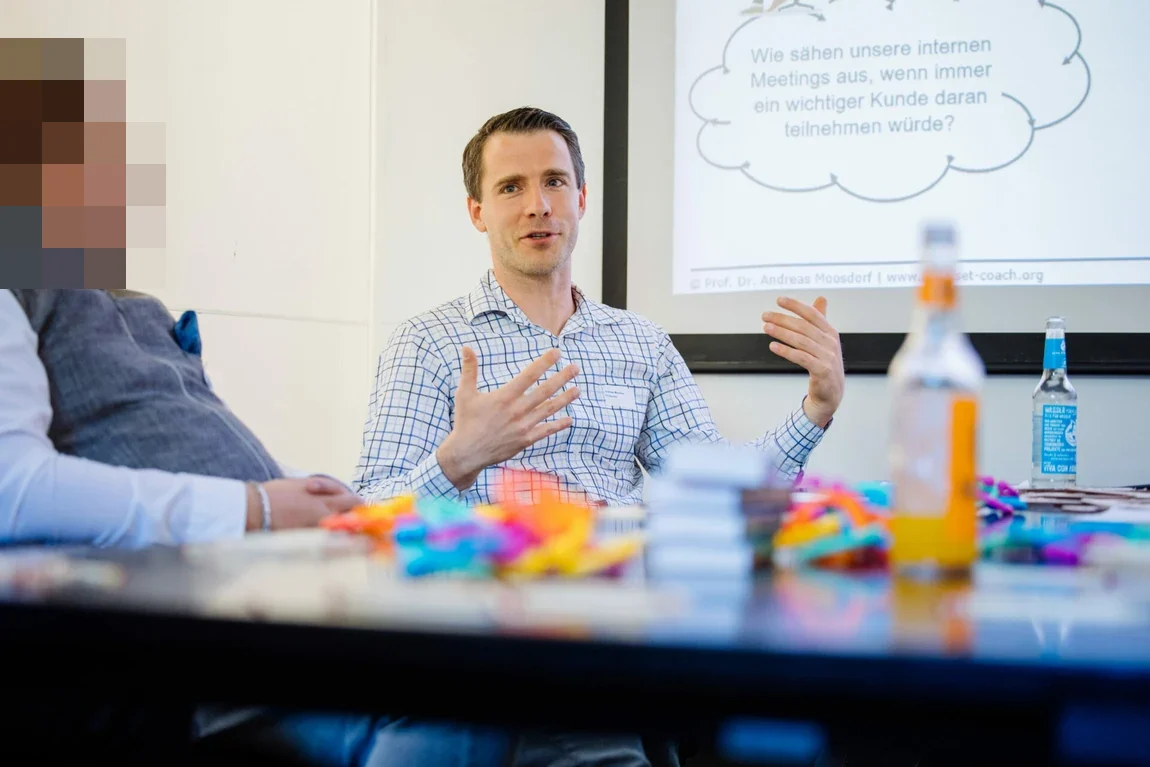
A challenge you share
Work with a shared challenge, a recurring discussion or an established way of seeing a problem. Workshops create space to examine assumptions together. Talks introduce the approach and invite further reflection.
Both are open to everyone. You can come to an open event on your own, and people from organisations are just as welcome to read the book or ask about individual coaching.
The book
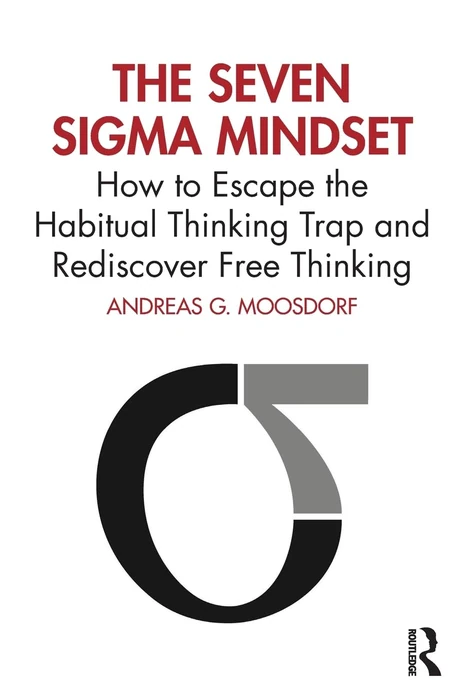
The Seven Sigma Mindset
Why do we keep reaching for the same answers, even when a situation has changed? The book looks at where habitual thinking comes from, what it does for us and how we can make room for freer thinking in everyday life.
Start with a conversation
Write to Andreas about a question of your own or a challenge in your team.